Matthew Coritz
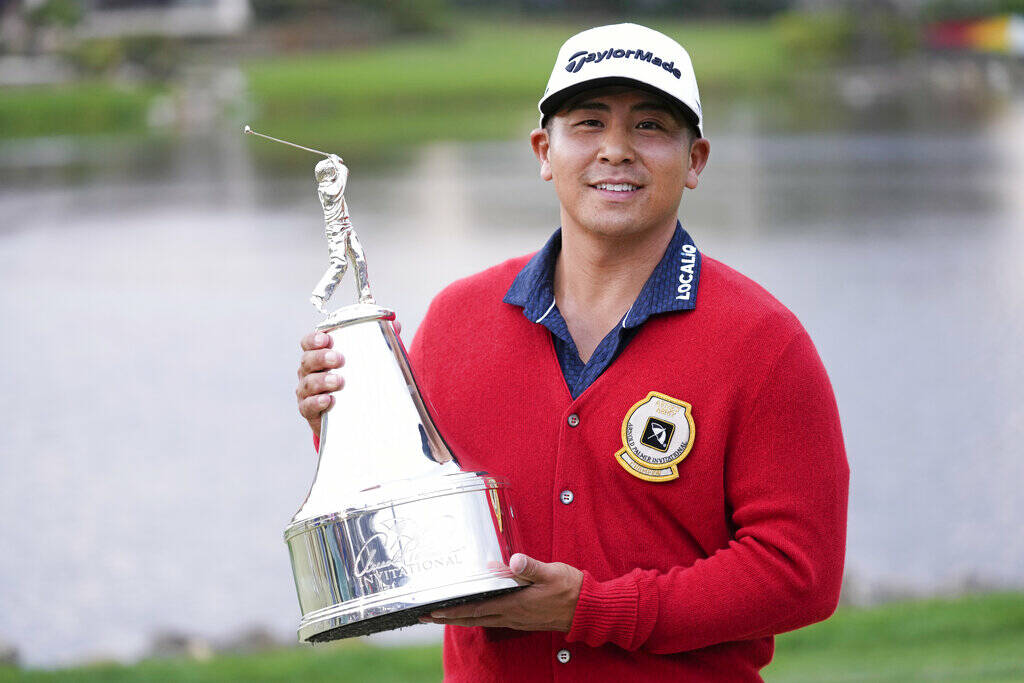
Kurt Kitayama, the man once referred to as “the project” at UNLV because his game was so raw at the time, is now a winner on the PGA Tour. In college, the talent and work ethic was there, always having been a pure ball striker and the last guy on the range, but the results never came. This forced Kitayama onto an absolutely gritty climb to the mountaintop he summited this past Sunday. There is the typical path of College, Qualifying (Q) School, the Korn Ferry Tour, then the PGA tour. There’s also the scenic path of some mini tours, a little time on an international tour perhaps, then finding your way back to the PGA Tour. Then there is Kurt Kitayama’s path. After college, Kurt spent time on the Canadian Tour, Web.com Tour, Asian Tour, Asian Developmental Tour, Japan Tour, PGA Tour China, China Tour, Korean Tour, European Tour Q School, Australasia Tour, Sunshine Tour, then gathered a couple wins on the DP World Tour, the Korn Ferry Tour, before making it back to the big time in gaining his PGA Tour membership card. If you want to talk about self-belief and never giving up on your dreams, look no further. To put the journey into context, he graduated from school in 2015 and got his tour card in 2021. That’s six long years, 72 months, or 288 weeks of not knowing if he had what it takes to stick around at the highest level… But man did it pay off with not only the 3.6 million dollar check that will clear this week but also the surreal feeling of getting to don the famed red cardigan the namesake of this tournament so famously used to wear, The legend, Mr. Arnold Palmer.
Kitayama started Sunday’s final round at the Arnold Palmer Invitational ahead of the pack by a few shots and looked unflappable early before an awful break on the ninth hole. His tee shot rolled a mere 6 inches out of bounds and he was forced to retee and ended up carding a triple bogey. He dropped right back into the thick of it at 8 under and was forced to enter a real test of the will that has taken him so far, both in success and travel, in his career. There was an onslaught of superstars on the back nine trying to chase him down, but Kitayama handled them with relative ease. There was a stretch late Sunday when seemingly nobody on the course could get a putt to fall. Jordan Speith missed 4 putts from inside 8 feet on the back nine to take him out of contention. Rory Mcilroy had a short birdie on 18 to get to the winning number of 9 under and that didn’t fall either. There was one exception to that trend, and it was Kitayama burying a 12-footer for birdie after a majestic 6 iron from 217 on the Par 3 17th hole. While most guys came through 17 just looking to get out with 3 and move on, Kitayama took dead aim and made an incredible 2 on the hole. With this he took a one-shot lead to the last, but with Bay Hill’s difficult 18th, the tournament was far from a sure thing. He tugged his drive left but hit a beauty to the center of the green to give himself 2 putts from 46 feet for the win. While many guys could falter here and three-putt, he took his time and almost canned the first, leaving it just one rotation short. This led to a hilarious moment where he marked the inch putt and got to soak everything in. That’s about the only putt I think the average golfer could make with that much money on the line. After 3 second-place finishes in the last year and a half, he tapped the one incher in to finally enter the winner’s circle.
With the win, Kitayama bucked the trend of the stars dominating these “elevated events.” The first two had been won by Scottie Scheffler and Jon Rahm, but it was refreshing to see a guy like Kitayama go in and beat those guys. With this win, Kitayama also offers a blueprint for success and hope for the guys who aren’t always seen in the list of top 10 in the world golf rankings.
Dominating the headlines this week was the release of the PGA Tour’s plans for what these elevated events will look like next year. The big changes are highlighted by limited fields and a no-cut format, with the latter causing a pretty big stir in the golf world. It’s very easy to see no-cut, limited field, and immediately jump to “Oh that sounds like LIV golf,” but that couldn’t be further from the truth. First, we can start with the fact that the PGA tour has always had no-cut events, so this really isn’t anything new, they’re just changing which events as well as adding a few more. Second, the “cut” is pretty relative. Most regular events have around 60-70 players after the cut anyway so it’s essentially turning the prior non-elevated event weeks and a player’s body of work into the “cut” for that week’s event. It gives the fans a chance to see all the stars convene at one tournament. I will say I wouldn’t be against a small cut down to maybe 50 players after Friday, but that’s something to navigate farther down the road.
There’s also talk that these elevated events ruin the rest of the events. Once again, that’s a very easy conclusion to jump to but after listening to the recent “No Laying up” Podcast with Peter Malnati, I’m convinced the opposite is actually true. They do a great job of covering in full the changes that will be made, but he does a particularly great job of explaining how the elevated events will be in sequence so as to give context to the non-elevated events. The changes will have players more motivated than ever to be at the top of their game and get into these events. For example, winning any event during the season will now provide an exemption into the rest of the elevated events for that season. Personally, I never really needed context to tune in to the 3M Open in Minneapolis for example, I will watch it anyway. But for the average fan, it gives them a reason to watch. Fringe players that fans will recognize will be there and now the events offer a chance to collect the points (both Fedex and/or OWGR) to get into the elevated events. This adds more pressure and creates a more continuous feel to the season rather than individual weeks. It’s kind of like watching individual episodes of “The Office.” They’ll always be funny, but watching it from start to finish provides layers to the story and makes it worth the time of tuning in every week to watch. It will always be entertaining to watch the best players in the world all at one event, but now the smaller events will have added value and will attract better players so watching them contributes to a continuous storyline making the week-to-week product better.
A lot of talks have been made of the “rank and file” guys of the tour, the players outside the top 50 in the world that make up a large body of the PGA Tour being upset about the changes. As one of those guys himself, Malnati provided insight into that as well. By incentivizing the non-designated events as the ones to get into the bigger tournaments, top players will be showing up to those and closing the gap on the argument of how elevated events will create a “2-tour system.” We saw this year how fields at events like the Honda Classic this year can suffer if the elevated events are not limited. As compelling as the storyline was of the battle between Chris Kirk, who overcame a bout with alcoholism, and Eric Cole, the journeyman mini-tour grinder, it’s fair to see it does not draw the number of eyeballs the Tour is looking for. There were only 8 out of the top 50 golfers in the world in the field. Also, quite simply if you’re a player on the outside looking in at the elevated events, don’t be bitter, get better. Kurt Kitayama did it. Why can’t you?
 Cup of Tee